After you make the sale..... #107
- Adrian Dionisio - business737 owner

- Mar 26, 2024
- 4 min read

This is the new beginning. When most think the journey ends here, the real go getters understand it's just the beginning. It's one of the most critical parts of the business journey for many reasons reasons.
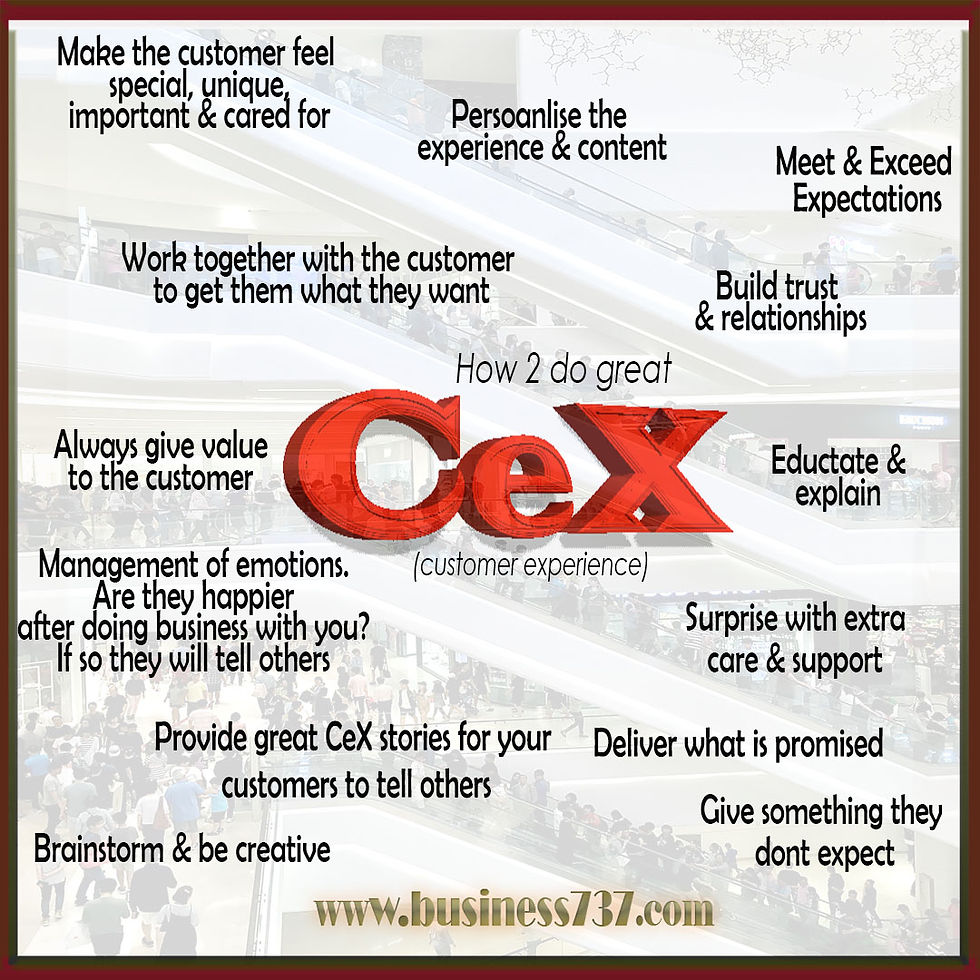
What happens after the sale ultimately shapes customer satisfaction and loyalty. Will they becomes a repeat buyer and refers others to your business? It all depends on if your promises have been fulfilled and whether they have received more than expected. Are they left feeling delighted with their purchase?
This is exactly what will differentiate your business from competitors. Prioritising this phase of the business journey is essential for building strong customer relationships, building support, enhancing brand reputation, and driving long-term success and profitability.
After the sale
This is the time to provide value to your customers. Don't hold back. Set yourself apart because only a few bother to do so. You have countless options
Usage
Offering guidance to users on setting up the product, finding features, and troubleshooting issues.
Education
Providing access to training, courses, and resources for customers.
Assurance
Assure customers with guarantees, warranties, returns, and replacements for faulty products.
Support
Provide both online and offline assistance to customers for questions and issues.
Reward
Recognise brand loyalty through offers, referral rewards, and special deals.
Do what it takes to make sure a buyer will remain loyal to your brand. You have to think beyond the sale. Got it?
This is one of the most important keys to business success. Delightful your customer. Give them the attention they need. Don't hound them but make them appreciate your care and concern.
Be available for them. Receive them when needed. Deal with them efficiently. Provide a great after-sale experience? We will highlight after-sales service examples that you can implement. They will help your business thrive.

Why is after-sales service so important?
Most businesses pay more attention to getting new customers. This seems a more obvious way to grow. Existing customers are potentially even more critical for the long-term health of your business.
Here are a few examples why it is so important for your business
Increased Customer Satisfaction:
Ensuring customers feel satisfied even after purchase enhances their buying experience and loyalty.
Increased Customer Retention:
Building trust through high-quality products and excellent service reduces the likelihood of customers seeking alternatives.
Referrals:
Happy customers often recommend your business to others, creating effective word-of-mouth marketing.
Product and Service Pairings:
Offering additional products or services that complement the initial purchase enhances the customer's experience.
Upselling:
Providing added value through supplementary products or services increases customer satisfaction and boosts profits.
Promoting New Products and Services:
Informing existing customers about new offerings through after-sales communication facilitates word-of-mouth promotion.
Customer Loyalty Programs:
Implementing loyalty programs fosters customer retention and strengthens relationships post-sale.
Continuous Improvement:
Using feedback from post-sales interactions to make ongoing improvements to products, services, and processes shows customers that their opinions are valued and contributes to long-term satisfaction and loyalty.
After-sales strategies to implement
Offer Valuable Warranties:
Ensure your warranty adds real value by avoiding overly strict policies. Customers should benefit when they encounter issues.
Use Live Chat for Support:
Proactively engage customers through live chat, offering timely assistance and building positive relationships.
Implement Customer Loyalty Programs:
Loyalty plans go beyond promotions, fostering bonds with customers and incentivizing their continued support.
Gather Feedback with Surveys:
Use surveys to gather feedback at various touchpoints, enhancing understanding, improving experiences, and driving loyalty.
Provide User Training:
Offer training resources to help customers maximize product value, fostering loyalty and reducing churn rates.
Offer Returns/Replacements:
Ensure customers can return or exchange defective products within a reasonable timeframe, building confidence and trust.
Personalise Follow-ups:
Send personalised follow-up emails or messages after purchase to check satisfaction and offer assistance.
Exclusive Events or Webinars:
Host exclusive events or webinars for existing customers, providing insider tips, updates, and networking opportunities.
Surprise Delights:
Occasionally surprise customers with small gifts, discounts, or personalised thank-you notes to show appreciation.
Community Engagement:
Create an online community or forum where customers can share experiences, ask questions, and interact with your brand and each other.
Tailored Product Recommendations:
Use customer purchase history and preferences to offer tailored product recommendations, enhancing the shopping experience.
Social Media Engagement:
Actively engage with customers on social media, responding to queries, acknowledging feedback, and showcasing user-generated content.
By incorporating these additional suggestions along with the core strategies, you can further strengthen your after-sales service and foster long-term customer loyalty.
Examples of good after-sales service
Here are some real-life examples of companies known for their excellent after-sales service:
Zappos:
Offers free shipping and returns with a generous 365-day return policy. Their customer service reps are known for their friendliness and willingness to help.
Apple:
Provides extensive technical support through phone, online chat, and in-store appointments. AppleCare offers additional coverage and support for Apple products.
Amazon:
Prioritises customer satisfaction with a robust return policy. Their customer service team is readily available to assist with any issues.
John Lewis & Partners:
Renowned for its exceptional customer service, John Lewis offers free returns and a generous refund policy. Their customer service representatives are known for their helpfulness and professionalism.
ASOS:
Offers free returns and refunds within 28 days, with a simple and user-friendly returns process. ASOS provides excellent customer support through various channels, including social media and live chat.
Nordstrom:
Offers free shipping and returns with a lenient return policy allowing returns at any time. Sales associates provide personalized recommendations and expert assistance.
L.L.Bean:
Known for its lifetime satisfaction guarantee allowing returns at any time. Offers free shipping, repairs for damaged items, and personalized customer service.
Ritz-Carlton: Empowers employees to provide personalized service and resolve issues promptly to exceed guest expectations.
These examples show how companies prioritise customer satisfaction and loyalty through various after-sales service initiatives, including generous return policies, personalized assistance, and a commitment to exceeding customer expectations.
and remember....
The journey doesn't end with a sale; it's just the beginning. This phase is critical for businesses, shaping customer satisfaction, loyalty, and ultimately, the success of the enterprise. What happens after the sale determines if customers will return and recommend your business. It's about fulfilling promises and leaving customers delighted with their purchase, setting your business apart from competitors.